Audisankara College of Engineering & Technology

About us
Department of Freshman Engineering
FME Home
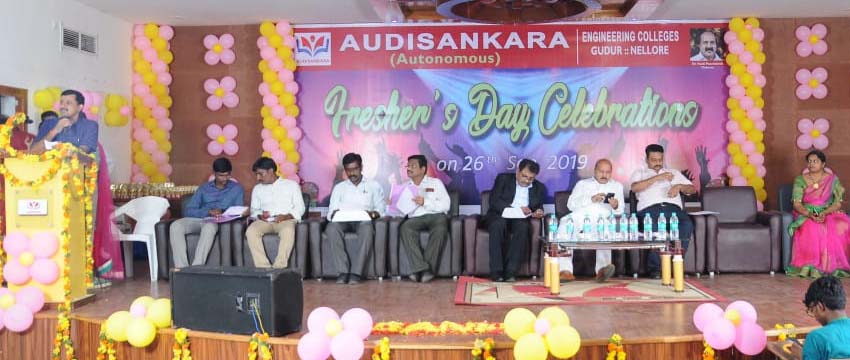
FME Home
The department of Humanities & Sciences was established in the year 2001 and it has emerged as a department pursuing excellence. The department embodies a crew of highly-qualified and well-experienced faculty members and non-teaching staff. The department subsumes 15 faculty members with Doctoral degree. Many faculty members are aces in some of the emerging fields of English, Mathematics and Physical sciences and have made significant contributions in their own fields.
The aim of the department is to voluminously educate impassioned engineering students in the basics of Mathematics, Physics, Chemistry & English which serve as a platform for the growth of students in their further study of Technical subjects. The strength of the department lies in the perfect synchronization of knowledge and skills.
The major motivating factor of the department is the commitment and team work that is exhibited in the teaching – learning process. Extra care is taken to offer special coaching class during weekends and crash course closer to the University Examinations, tailor – made to suit the needs of all types of students. Every faculty member is provided to access to the internet. This facilitates sharing of knowledge and information which plays a significant role in upgrading and enriching research work.
Students are trained in Group Discussions, Presentations and Interview skills in order to make them employable. The Department has made tremendous progress technologically. Teaching and Research should go hand in hand. The faculty members of the department actively participate and present papers in conferences and attend programmes such as workshop, seminar, FDP etc.. Various guest lectures and industrial visits are arranged for the students to acquire practical knowledge in their course of study.
Vision & Mission
Vision
To accommodate the components of Science, Humanities and Engineering to groom and enhance the scientific temperament of the students through the knowledge of core courses of Humanities & Sciences and make them globally acknowledged professionals.
Mission
M1: To establish good foundation to transform the budding engineers into successful, exuberant and ambitious engineers of future.
M2: To Endeavour to provide the strong base in Engineering & Technology, where students, faculty and staff work collaboratively to expand knowledge in the basic disciplines of Humanities and Sciences.
M3: To provide value based education and mould the character of younger generation through Science and Soft skills, inculcating discipline and perseverance with the aim of making best citizens.
Objectives
Program Educational Objectives(PEO's) |
|||
PEO1:Graduates of B.E. Mechanical Engineering should have a comprehensive background of mathematics, science, and basics of mechanical engineering to solve applications related mechanical engineering and multidisciplinary areas. PEO2:Graduates of B.E. Mechanical Engineering need to develop expertise and acumen in core areas like design, thermal and manufacturing engineering to the satisfaction of employers and blossom into entrepreneurs, scientists and technocrats with ethical values. PEO3:Mechanical Engineering program orients its graduates towards professional growth either through employment or higher studies or research and contemporary areas of socio-technological issues like energy crisis, pollution and industrial relations.
|
|||
Program Outcomes |
|||
PO1:Engineering knowledge: Apply the knowledge of mathematics, science, engineering fundamentals, and an engineering specialization to the solution of complex engineering problems. PO2:Problem analysis: Identify, formulate, review research literature, and analyze complex engineering problems reaching substantiated conclusions using first principles of mathematics, natural sciences, and engineering sciences. PO3:Design/development of solutions: Design solutions for complex engineering problems and design system components or processes that meet the specified needs with appropriate consideration for the public health and safety, and the cultural, societal, and environmental considerations. PO4:Conduct investigations of complex problems: Use research-based knowledge and research methods including design of experiments, analysis and interpretation of data, and synthesis of the information to provide valid conclusions. PO5:Modern tool usage: Create, select, and apply appropriate techniques, resources, and modern engineering and IT tools including prediction and modeling to complex engineering activities with an understanding of the limitations. PO6:The engineer and society: Apply reasoning informed by the contextual knowledge to assess societal, health, safety, legal and cultural issues and the consequent responsibilities relevant to the professional engineering practice. PO7:Environment and sustainability: Understand the impact of the professional engineering solutions in societal and environmental contexts, and demonstrate the knowledge of, and need for sustainable development. PO8:Ethics: Apply ethical principles and commit to professional ethics and responsibilities and norms of the engineering practice. PO9:Individual and team work: Function effectively as an individual, and as a member or leader in diverse teams, and in multidisciplinary settings. PO10:Communication: Communicate effectively on complex engineering activities with the engineering community and with society at large, such as, being able to comprehend and write effective reports and design documentation, make effective presentations, and give and receive clear instructions. PO11:Project management and finance: Demonstrate knowledge and understanding of the engineering and management principles and apply these to one�s own work, as a member and leader in a team, to manage projects and in multidisciplinary environments. PO12:Life-long learning: Recognize the need for, and have the preparation and ability to engage in independent and life-long learning in the broadest context of technological change. |
|||
R23 Syllabus
 B.Tech-CSE - Course Structure and Detailed Syllabi (R23)
B.Tech-ECE - Course Structure and Detailed Syllabi (R23)
B.Tech-EEE - Course Structure and Detailed Syllabi (R23)
B.Tech-CE - Course Structure and Detailed Syllabi (R23)
B.Tech-ME - Course Structure and Detailed Syllabi (R23)
B.Tech-CSE (Artificial Intelligence) - Course Structure and Detailed Syllabi (R23)
B.Tech-CSE ( Data Science) - Course Structure and Detailed Syllabi (R23)
B.Tech-Artificial Intelligence & Data Science - Course Structure and Detailed Syllabi (R23)
Department of English BOS Members
| S.No | Name of the Member | Designation | Role of the BoS |
|---|---|---|---|
| 1 | Dr.Y.Harnath | Professor & HOD | Chairman |
| Subject Experts Nominated by Academic Council | |||
| 2 | Dr.D.S.Kesava Rao | Professor, Dept. of English, NIT,Warangal | Member |
| 3 | Dr.K.Narsimha Rao | Professor, Dept. of English, EFLU, Hyderabad | Member |
| University Nominee | |||
| 4 | Dr.V.B.Chithra | Professor, Dept. of English, JNTUA, Anantapuramu | Member |
| Department Faculty | |||
| 5 | Prof.G.Harikrishna | Associate Professor | Member |
| 6 | Prof.S.J.M.Rita | Associate Professor | Member |
| Industry Representative | |||
| 7 | Mr.Y.Vidya Sagar | Managing Director, Citrus Pvt., Ltd, Gudur | Member |
Department of Mathematics BOS Members
| S.No | Name of the Member | Designation | Role of the BoS |
|---|---|---|---|
| 1 | Dr.Y.Harnath | Professor & HOD | Chairman |
| Subject Experts Nominated by Academic Council | |||
| 2 | Dr.G.R.K.Acharya | Professor, Dept. of Mathematics, NIT, Warangal | Member |
| 3 | Dr.P.Vasudeva Reddy | Professor, Dept. of Mathematics, AU, Vizag | Member |
| University Nominee | |||
| 4 | Dr.YVSS Sanyasi Raju | Professor, Dept. of Mathematics, IIT, Madras | Member |
| Department Faculty | |||
| 5 | Dr.M.Rajaiah | Professor & Dean Academics | Member |
| 6 | Dr.D.Kavitha | Associate Professor | Member |
| 7 | Prof.V.Jagadeesh | Associate Professor | Member |
| 8 | Prof.M.Latha | Assistant Professor | Member |
| 9 | Prof.A.Suman | Assistant Professor | Member |
| Industry Representative | |||
| 10 | Dr.Bhavani Kumar Yellapragada | Scientist SG, NARL – ISRO, Government of India, Gadanki, Pakala, A.P | Member |
Department of Chemistry BOS Members
| S.No | Name of the Member | Designation | Role of the BoS |
|---|---|---|---|
| 1 | Dr.Y.Harnath | Professor & HOD | Chairman |
| Subject Experts Nominated by Academic Council | |||
| 2 | Dr.G.Ranga Rao | Professor, Dept. of Chemistry, VIT, Amaravathi | Member |
| 3 | Dr.D.Srinivasulu | Professor, Dept. of Chemistry, SV University, Tirupati. | Member |
| University Nominee | |||
| 4 | Dr.G.V.SubbaReddy | Professor, Dept. of Chemistry, JNTUACEP, Pulivendula | Member |
| Department Faculty | |||
| 5 | Dr.G.Sujatha | Professor | Member |
| 6 | Prof.T.K.MadhuSudhan | Associate Professor | Member |
| Industry Representative | |||
| 7 | Dr.Surisetti Suresh | Senior Scientist, Organic Synthesis & Process Chemistry,CSIR-IICT, Hyderabad | Member |
Department of Physics BOS Members Details
| S.No | Name of the Member | Designation | Role of the BoS |
|---|---|---|---|
| 1 | Dr.Y.Harnath | Professor & HOD | Chairman |
| Subject Experts Nominated by Academic Council | |||
| 2 | Dr.Murthy VRK | Professor, Dept. of Physics, IIT, Madras | Member |
| 3 | Dr.A.Srinivas Rao | Professor, Delhi Technological University, New Delhi | Member |
| University Nominee | |||
| 4 | Dr.K.Thyagarajan | Professor, Dept. of Physics, JNTUACEP, Pulivendula | Member |
| Department Faculty | |||
| 5 | Prof.A.Mallikarjuna | Associate Professor | Member |
| 6 | Prof.P.V.Ramanaiah | Associate Professor | Member |
| 7 | Prof.P.Ankoji | Associate Professor | Member |
| Industry Representative | |||
| 8 | Dr.A.Jagadesh | Director, Nayudamma Centre for Development Alternatives, Nellore | Member |
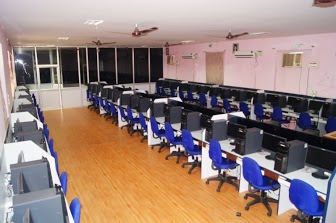
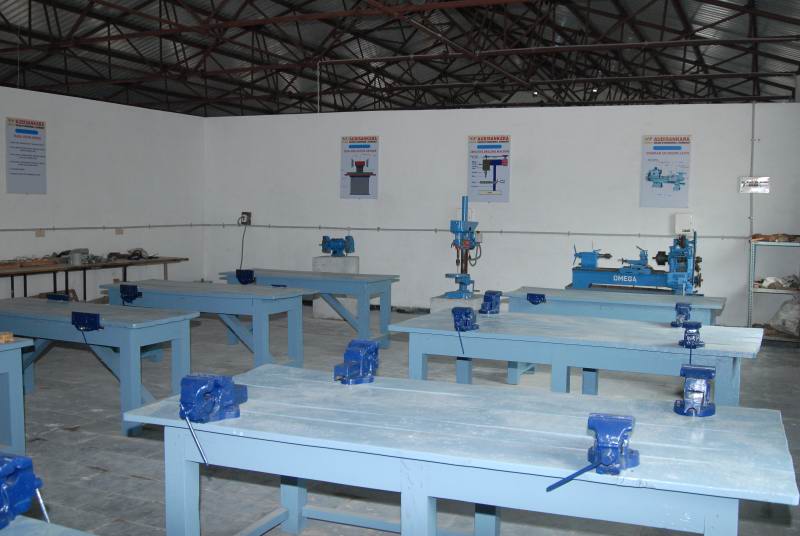
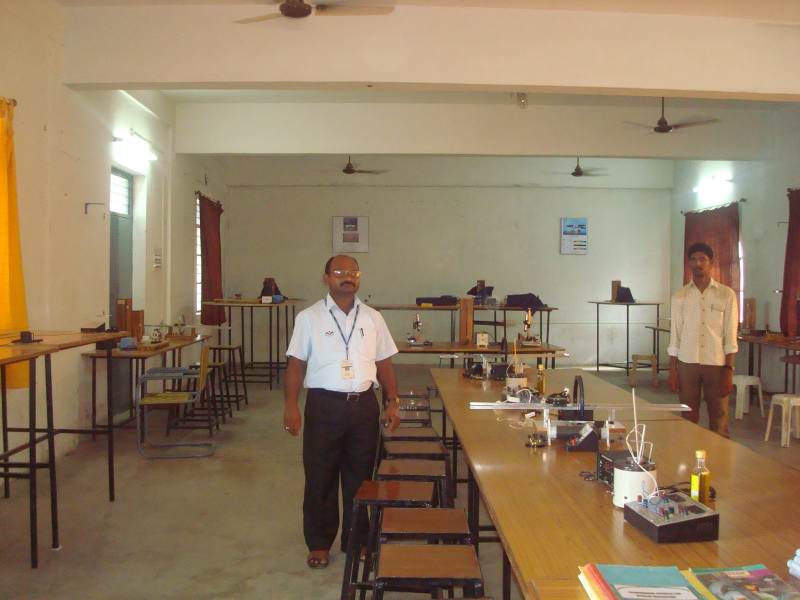
Laboratories
| Freshman Engineering Labs | |||
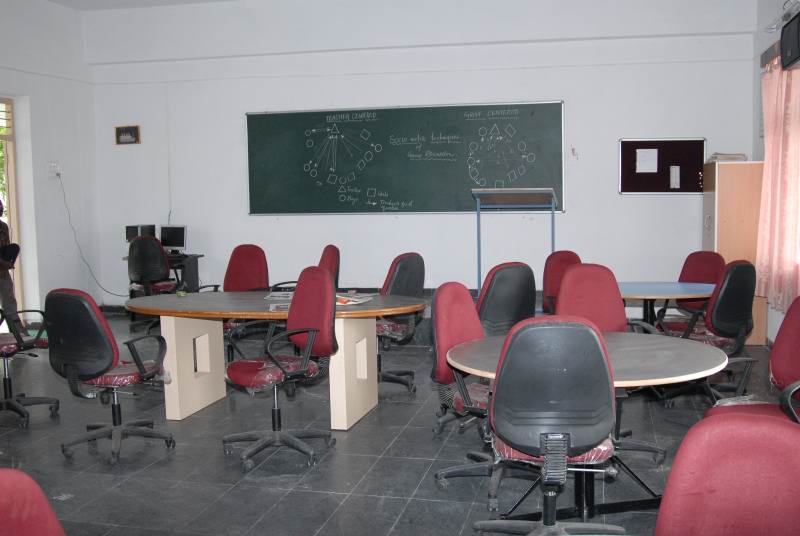
|
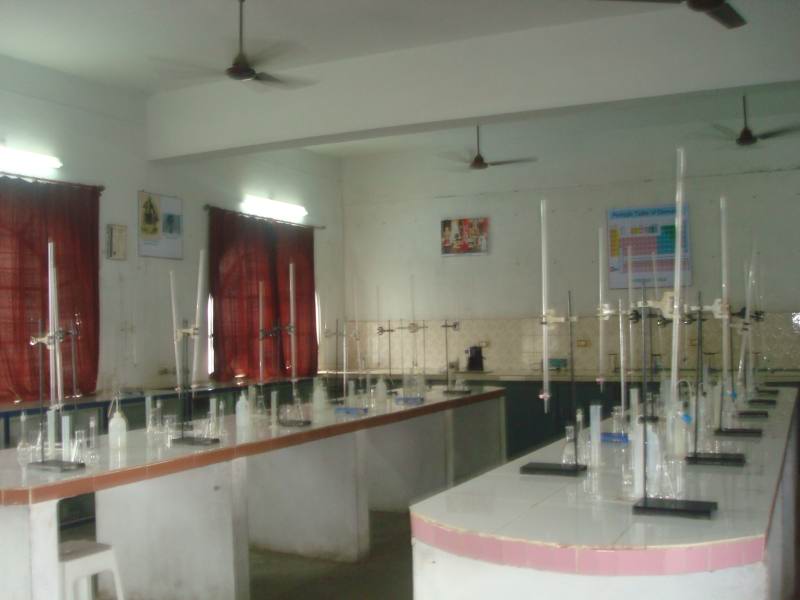
|
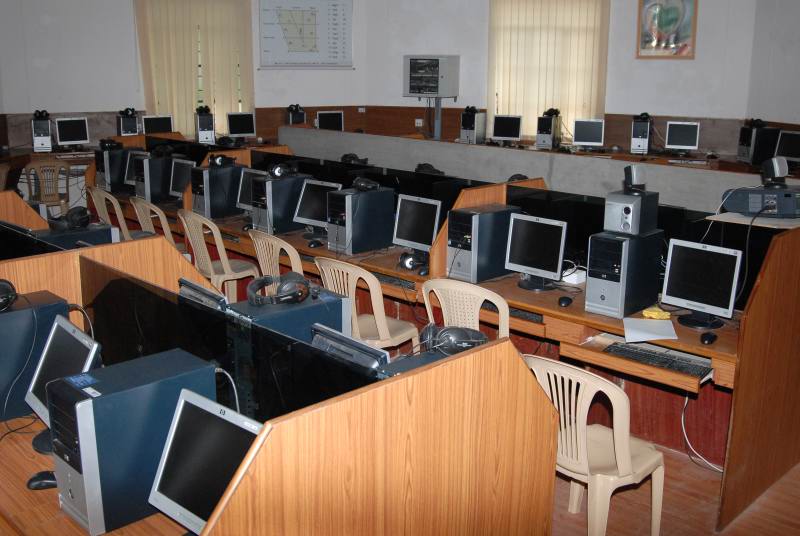
|
|
| Advanced English Communication Skills Lab | Engineering Chemistry Lab | English Language & Communication Skills Lab | |
|
|
|
|
| Computer Programming Lab | Engineering Workshop | Engineering Physics Lab | |
R16 Syllabus 1st-4th Semesters
R16 Syllabus 1st-4th Semesters
R16 Syllabus 5th-8th Semesters
R16 Syllabus 5th-8th Semesters
R18 Regulations & Syllabus
R18 Regulations & Syllabus
Contact HoD
|
Dr.Y.Haranath,M.Sc., M.Phil., Ph.D |