Audisankara College of Engineering & Technology

About us
Diploma in Electrical and Electronics Engineering (DEEE)
About Diploma
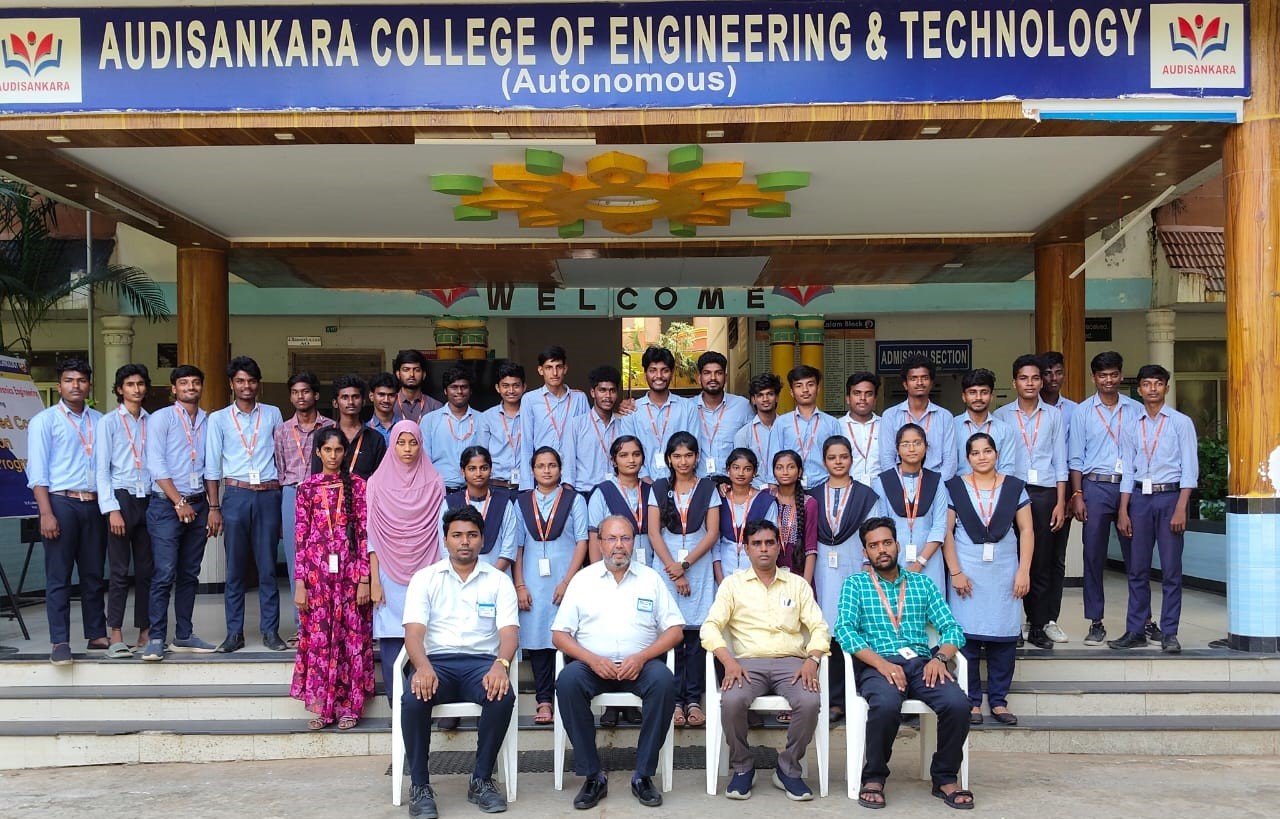
Audisankara college of Engineering and technology started 2nd shift polytechnic in the year 2009 with an intake of 180 and the intake was enhanced to 240 and 300 subsequently in the years of 2010 and 2013 respectively. Currently the intake was increased to 600 with respect to all Diploma programs. It was started with an objective of imparting quality technical education to the students of rural area inculcating ethical values and spirit of professionalism. The institute has well established infrastructure with state of art laboratories and well qualified and committed faculty. The institute has a dedicated CISCO networking academy with two experienced trainers. The courses offered are Diploma in Computer Science & Engineering (CME), Diploma in Electronics and Communications Engineering (DECE) and Diploma in Electrical and Electronics Engineering (DEEE). Audisankara polytechnic college has gained PRATHIBHA awards continuously for the academic year 2015-16, 2016-17 and 2017-18 respectively to its credit. It has proven record in providing placements to the students in MNCs and local companies with good package. The institute also won so many prizes and medals in the sports and games organized by APSBTET in every year. The college also motivates our students to have active participation in co-curricular and extracurricular activities to shape the students in all directions.
Courses offering by department
 Diploma in Computer Science & Engineering (DCME) | Year of Inception 2009 | Intake - 300
Diploma in Electronics and Communications Engineering (DECE) | Year of Inception 2009 | Intake 240
Diploma in Electrical and Electronics Engineering (DEEE) | Year of Inception 2009 | Intake 60
About DEEE
ASCET started Diploma in Electrical and Electronics Engineering in the year 2009 with an intake of 60 and the intake was enhanced to 120 in the year 2013. Electrical Engineering deals with the study and application of electricity, electrical and electronic circuits and electromagnetism. Identified as an occupation in the late nineteenth century post commercialization of the electric telegraph and electrical power supply, the field today covers a range of subtopics including generation, transmission and distribution of electric power, Power electronics, control systems and industrial drives.
Vision
To develop Electrical & Electronics Engineering professionals competent to face the global challenges in a Edifying environment conducive to learn technical knowledge, skills blended with ethics and values, to Coordinate and serve to the society for betterment and comfortable living.
Mission
M1:To provide a competitive learning environment, through a need-based curriculum designed in collaboration with industry, conducive for high quality education emphasising on transfer of knowledge and skill development essential for the profession and the society as well.
M2:To nurture higher order leadership qualities and ethics and values in students to enable them to be leaders in their chosen professions while maintaining the highest level of ethics.
M3:To encourage the spirit of inquisition to promote innovation and entrepreneurship
strengthened with life skills to sustain the stress.
M4:To foster effective interactions and networking with all the stake holders so as to work
towards the growth and sustainability of the society and environment.
|
|||
|
PEO1:An ability to apply knowledge of mathematics, Science, engineering and management principles in solving problems in the field of Electrical and Electronics Engineering. |
|||
Program Outcomes (PO's) |
|||
|
PO1: Basic and discipline specific knowledge: Apply knowledge of basic mathematics, science and engineering fundamentals and engineering specialization to solve the engineering problems. |
|||
Program Specific Outcomes (PSO's) |
|||
PSO1:. An ability to understand the basic concepts of Electrical & Electronics Engineering and to apply them to various areas like Wiring Installations, Lighting Schemes, Static & Rotating machinery, drawing layouts, Power System (Generation, Transmission, Distribution& utilisation), Digital electronics, power control devices, Computer programming, managerial skills and the use SMART technologies. |
|||
|
|
|
|